

Quick answer
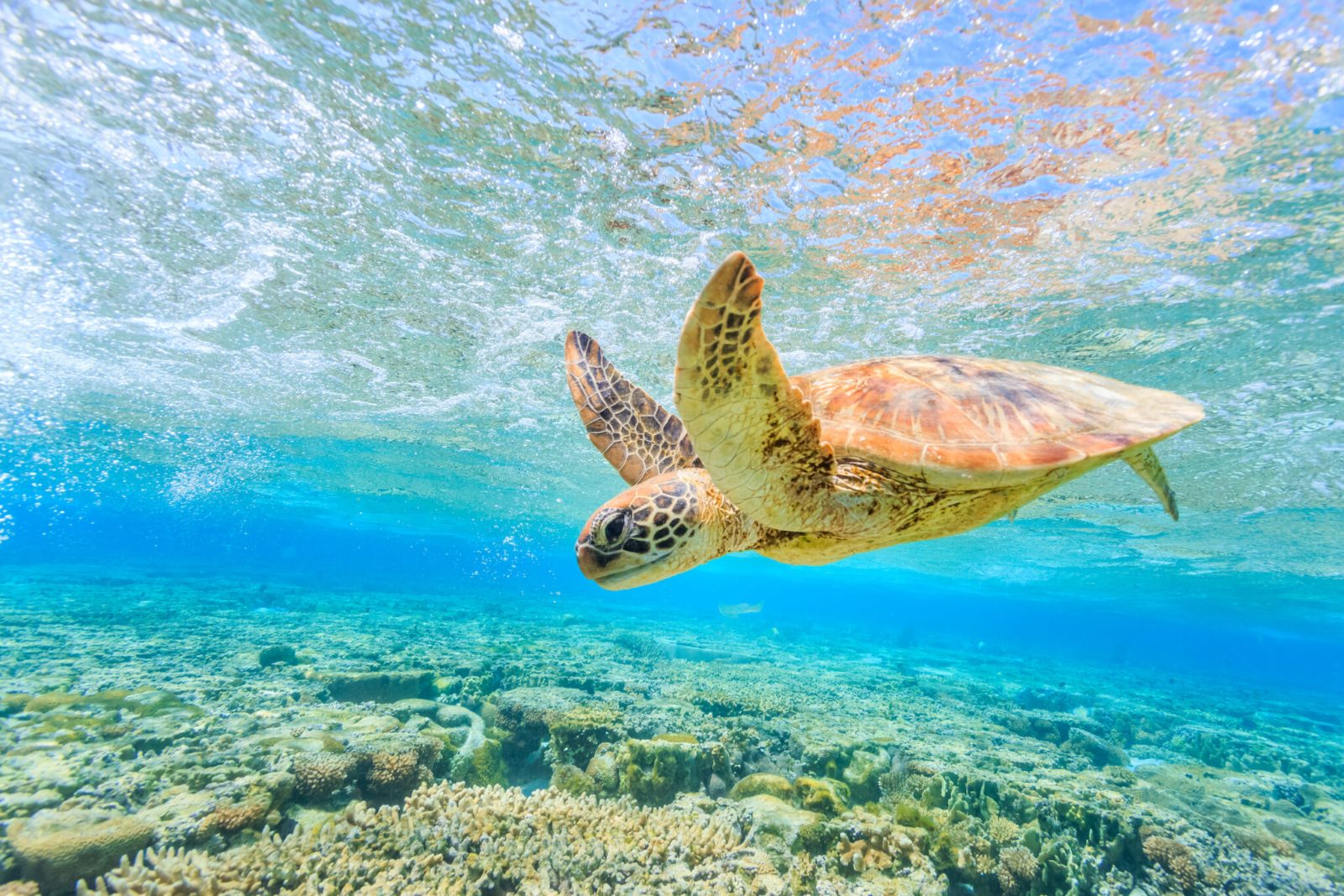
The most consistent spots for snorkeling Bali turtles are the house reef at Serangan Turtle Conservation Center (free entry, open Monday-Saturday 09:00-16:00), Amed's Japanese Shipwreck site in the northeast, and the shallow reefs off Gili Trawangan. Green sea turtles feed on seagrass beds year-round in these zones, with sightings most frequent during calm-water months from April through October when visibility exceeds 15 meters.
Green sea turtles surface to breathe every four to seven minutes while feeding, a pattern that makes shallow-water encounters far more predictable than most wildlife sightings. Bali's coastline supports roughly 2,000 nesting females, the majority concentrated on beaches between Kuta and Serangan in the south and around the Gili Islands off the northwest coast. Serangan Island operates the island's largest hatchery, releasing more than 10,000 hatchlings annually since rescue programs began in the 1990s. The adjacent conservation center maintains holding ponds and a protected snorkel zone where juvenile turtles acclimate before release. Visitors snorkeling here encounter turtles at various life stages, from palm-sized juveniles to 90-kilogram adults returning to feed. The site remains accessible to confident swimmers without a guide, though staff recommend arriving mid-morning when hatchling releases and feeding demonstrations coincide. Amed and the nearby village of Jemeluk anchor Bali's northeast turtle corridor. The Japanese Shipwreck site, 30 meters offshore in three to five meters of water, attracts turtles year-round to its algae-covered hull. Snorkelers enter directly from the black-sand beach and typically spot two to four individuals per hour during morning sessions. Water temperature stays between 27°C and 29°C, warm enough to snorkel comfortably in a rash guard. The Gili Islands—Trawangan, Meno, and Air—sit in a marine protected zone with permanent turtle populations. Trawangan's Turtle Point, a marked snorkel site on the island's northeast side, records the highest encounter rate: 85 percent of morning snorkelers report sightings. Boat operators run short trips from Bali's northwest harbors, though most visitors stay overnight to access sites at dawn when turtles graze most actively. Conservation volunteers conduct weekly population surveys and enforce no-touch zones, critical work given the species' 70-year lifespan and late sexual maturity.
“Green sea turtles surface to breathe every four to seven minutes while feeding, a pattern that makes shallow-water encounters far more predictable than most wildlife sightings.”
Best Time for Snorkeling Bali Turtles and Conservation Visits
The best time for observing turtle activity is during the mid-morning window, which aligns with active conservation work. Planning your visit between April and October provides the most favorable conditions for coastal activities.
Dry Season (April–October)
Moderate; higher in July/AugustDry and sunny, 27°C–30°C
Wet Season (November–March)
Low; quieter periodsFrequent rain, 26°C–29°C
Mid-morning (09:00–11:00)
Peak activity for staff—; ideal for seeing hatchlings.
Verdict: Plan your visit for Monday to Thursday between 09:00 and 11:00 during the dry season months of April through October.
Operating Hours for Snorkeling Bali Turtles Center
The Turtle Conservation and Education Center operates on a set weekly schedule, remaining closed on Sundays. Visitors are welcome during the following hours.
| Monday | 09:00–16:00 | |
|---|---|---|
| Tuesday | 09:00–16:00 | |
| Wednesday | 09:00–16:00 | |
| Thursday | 09:00–16:00 | |
| Friday | 09:00–16:00 | |
| Saturday | 09:00–16:00 | |
| Sunday | Closed |
Getting to the Snorkeling Bali Turtles Conservation Site
The turtle conservation site is located on Serangan Island, reachable via the main access road connecting to the Denpasar region. Most visitors access the facility by private vehicle or taxi.
Travel via Jl. Bypass Ngurah Rai to Jl. Tukad Punggawa
Direct drop-off at Jl. Tukad Punggawa, Serangan
Follow signs to Serangan Island via Jl. Tukad Punggawa
Conservation Facts About Snorkeling Bali Turtles
The Turtle Conservation and Education Center (TCEC) in Serangan serves as a vital hub for marine protection in Bali. These initiatives focus on rehabilitation and population stabilization for local sea turtle species.
Five turtle species in Indonesia
Indonesia is home to six of the world's seven sea turtle species, with the Olive Ridley, Green, and Hawksbill turtles frequently observed in Bali waters. TCEC plays a key role in monitoring these populations.
Illegal trade suppression
The TCEC facility was established in 2006 to combat the illegal trade of sea turtles in Bali. It provides a sanctuary for turtles confiscated by local authorities.
Green sea turtle rehabilitation
The center specializes in the care of Green sea turtles, which are often brought in due to injuries from fishing gear or pollution. Each turtle receives veterinary oversight before potential release.
Egg rescue and incubation
Local conservationists collect turtle eggs from vulnerable beach nests to protect them from predators and human interference. These eggs are moved to a controlled hatchery environment at the center.
Community-led conservation model
The TCEC operates through a collaboration between local village communities and the Bali Turtle Conservation Foundation. This model ensures that residents participate directly in the protection of marine life.
Marine debris impact studies
Conservation staff document the impact of plastic ingestion on rescued turtles. This data helps local authorities implement better waste management strategies near nesting grounds.
Rules for Visiting and Snorkeling Bali Turtles
The Turtle Conservation and Education Centre relies on visitor cooperation to protect nesting sites and minimize stress to rehabilitating turtles. Simple behavioral adjustments help preserve the species and ensure hatchlings reach the sea safely.
Do
- Keep voices low near nesting areas and rehabilitation tanks
- Stay behind designated barriers when observing turtle feeding or medical care
- Dispose of all plastics in bins to prevent ocean contamination
- Ask staff before photographing hatchlings or injured turtles
- Follow volunteer instructions during beach clean-up sessions
- Donate to conservation programs if entrance remains free
Don't
- Touch turtles, hatchlings, or nesting sites under any circumstances
- Use flash photography near turtles or during release events
- Feed turtles human food or disrupt scheduled feeding times
- Walk on cordoned nesting beaches outside guided tour hours
- Smoke or leave litter on the beach or in water
- Attempt to handle or redirect hatchlings crawling to shore
Check availability
Common questions about snorkeling bali turtles and conservation
Everything you need to know about snorkeling bali turtles